Health / Longevity
Biological Age, Explained
The internet has become very interested in telling us how old we “really” are. A blood test, a cheek swab or a longevity clinic can now produce a number that claims to describe your biological age. The science behind ageing clocks is genuinely interesting. The idea that one score can tell you the age of your entire body is much less settled.
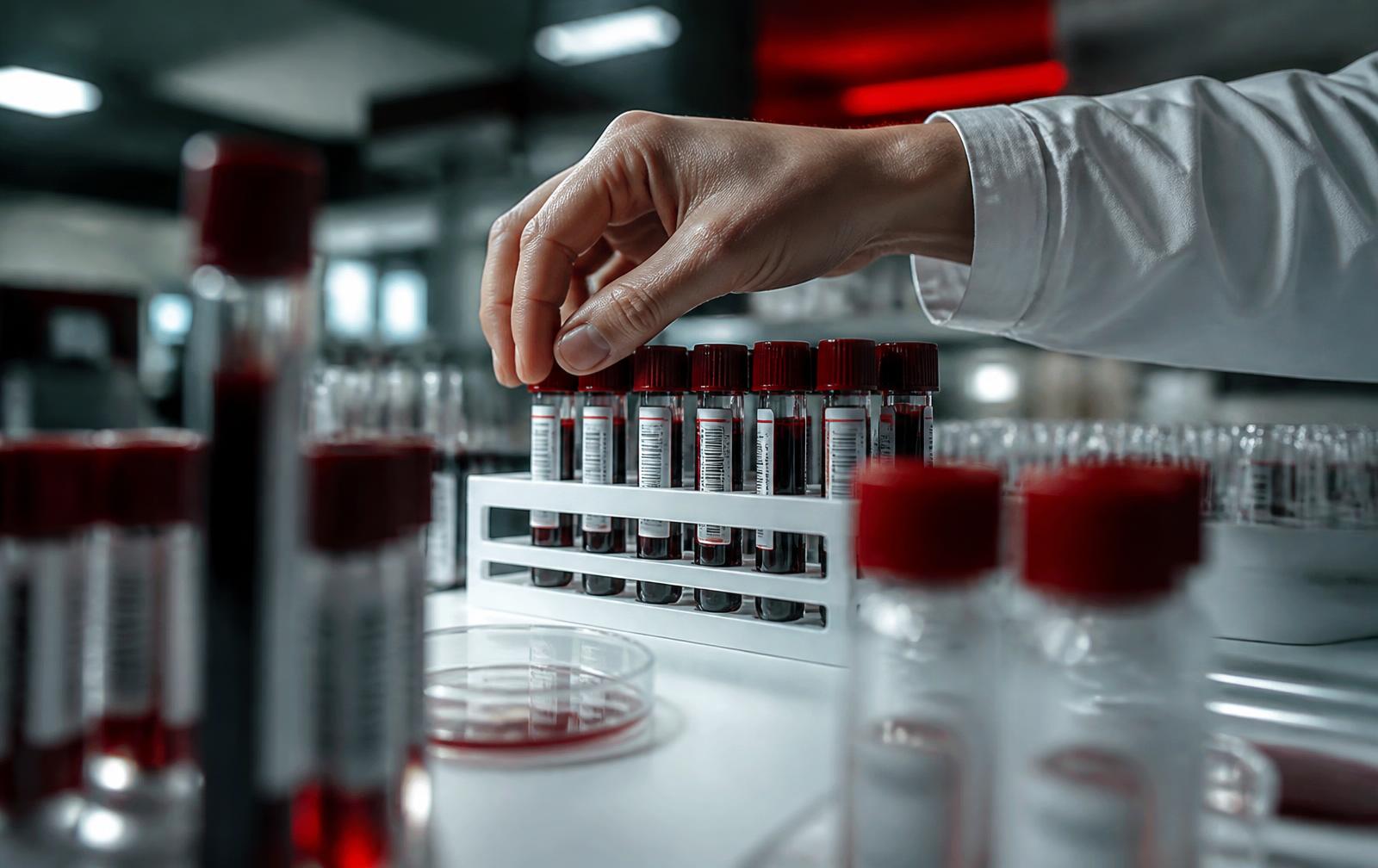
The internet has become very interested in telling us how old we “really” are. A blood test, a cheek swab or a longevity clinic can now produce a number that claims to describe your biological age. The science behind ageing clocks is genuinely interesting. The idea that one score can tell you the age of your entire body is much less settled.
The appeal of a hidden age
There is something psychologically irresistible about being told that your body has a hidden age.
Chronological age is boring. It is fixed, public and impossible to negotiate with. Biological age, by contrast, sounds like something you might be able to influence. You may be 38 on paper but 31 “biologically.” Or 28 and apparently ageing like someone in their forties. The number immediately suggests a story about what you have done well, what you have done wrong and how urgently you should start correcting it.
This is part of why biological-age testing has moved so quickly from research laboratories into the wellness market. Longevity clinics offer it. Consumer tests promise to estimate it from blood or saliva. Fitness platforms increasingly translate performance into “fitness age.” Wearables give us cardiovascular ages, metabolic ages and recovery scores. The general proposition is always similar: chronological age tells you how long you have been alive, while biological age tells you how well your body is ageing.
That distinction is scientifically meaningful. It is also much harder to measure than the consumer version suggests.
““This particular ageing clock estimated an epigenetic age of 27 based on this sample.” Less seductive. Closer to what was actually measured.”
There is no single meter inside the body
Ageing does not happen evenly. Two people born on the same day can differ enormously in cardiovascular health, muscle strength, kidney function, cognition, metabolic health and disease risk. Researchers have therefore spent decades trying to identify biomarkers that capture aspects of ageing more precisely than birthdays do.
The difficulty is that there is no single agreed biological-age meter inside the body waiting to be read.
A 2024 paper specifically addressing the language around biological age argues that the concept is better understood as an abstract description of how a person is ageing functionally and biologically, rather than a single measurable quantity. The authors point out that molecular ageing is heavily tissue-specific and that most scientists do not believe ageing can be reduced to one number. A grip-strength result, a VO2 max or an epigenetic clock may each tell us something about ageing, but none of them can reasonably be treated as the age of the whole person.
That becomes important when someone receives a result such as “biological age: 34.”
What exactly is 34?
If the test is an epigenetic clock, it may be estimating patterns of DNA methylation. If it is based on blood chemistry, the model may be using markers associated with inflammation, metabolic health or organ function. Another clock might rely on proteins, imaging data or physical performance. These methods do not necessarily measure the same thing, and different clocks can give different answers for the same person.
The phrase “biological age” makes all of those outputs sound interchangeable.
They are not.
From population science to personal score
Epigenetic clocks are probably the best-known example. They use machine-learning models to analyse patterns of DNA methylation, chemical modifications to DNA that can vary with age and other biological processes. Some early clocks were trained primarily to predict chronological age. Later generations were designed to capture outcomes such as mortality risk, healthspan or the pace of ageing.
These tools have become extremely useful in research. Scientists can use them to study whether certain exposures, diseases, environments or behaviours are associated with faster or slower ageing patterns across groups of people. A 2025 review in Nature Reviews Genetics describes epigenetic clocks as powerful tools for studying ageing while also emphasising substantial statistical and computational challenges, including interpretation, cell-type differences and uncertainty about exactly what different clocks are capturing.
That last part tends to disappear once the technology enters wellness culture.
A research instrument designed to compare patterns across populations becomes a personal score. The number appears on a dashboard. The dashboard inevitably invites action.
This is where “biological age” becomes more complicated.
A 2025 paper examining the use of epigenetic clocks as personal biomarkers argued that the tools currently fall short of ordinary standards for individual clinical decision-making. The authors identified technical variability, differences in sample processing, tissue specificity and uncertainty over what a change in an individual score actually means. Their concern is not that the clocks are scientifically useless. It is almost the opposite: they are valuable research tools that may be asked to do something they were not designed to do.
This difference between population science and personal diagnosis is easy to miss.
Imagine a study showing that, across thousands of people, a particular ageing score is associated with higher mortality risk. That can be scientifically valuable. It does not automatically mean that a single individual whose score changes by three years should alter their medical treatment, supplement routine or diet.
Population-level association and individual-level interpretation are different problems.
Measurement, uncertainty and the missing gold standard
Measurement error matters too. Even small technical differences in sample collection or laboratory processing can influence some clock estimates. Different clocks use different algorithms and were trained on different populations. Some measurements are tissue-specific, meaning a blood-based result and a cheek-swab result are not necessarily describing the same biological process.
There is also no universally accepted gold-standard biological age against which all these systems can be checked. We know your chronological age because there is a real date to compare it with. There is no equivalent objectively verified number showing that your body is truly 31.7 years old.
That does not make biological-age research meaningless. It makes the precision of the consumer number slightly misleading.
The best way to think about an ageing clock may be as an indicator rather than a verdict.
It can potentially show whether particular biological patterns look older or younger relative to a reference population. Some clocks may also correlate with health outcomes in useful ways. Researchers are continuing to improve them, and newer models are increasingly designed around disease risk, mortality, organ-specific ageing and other outcomes rather than simply trying to guess chronological age.
But even researchers working directly on these clocks caution against pretending all of them measure one unified process. A 2025 Nature Aging commentary noted that epigenetic clocks can capture several different types of biological signal, including intrinsic changes, environmental influences and stochastic processes. Two clocks can therefore disagree without one necessarily being “wrong.” They may be measuring different aspects of ageing.
Why we want the number so badly
That is a very different picture from the longevity-clinic fantasy of one definitive age hidden beneath your chronological one.
It also raises a more interesting question: why do we want the number so badly?
Part of the answer is probably that ageing feels difficult to act on when it is described as a gradual, complicated process. A single number makes it manageable. If your biological age is five years older than your chronological age, there appears to be a problem. If you can lower it, there appears to be progress.
This is the same psychological appeal behind sleep scores, readiness scores and metabolic scores. Measurement creates the sensation that something complex has become controllable.
Sometimes that is useful. It can motivate behaviour or help researchers identify patterns that would otherwise be invisible. But once the score becomes the goal, strange things happen. Instead of asking whether you are sleeping well, physically capable, metabolically healthy or free of preventable disease, you start asking whether the number moved.
That is not necessarily the same thing.
The irony is that the most useful things we currently know about healthy ageing are generally much less futuristic than the testing industry around them.
Do not smoke. Move your body. Maintain strength and cardiovascular fitness. Sleep adequately. Treat high blood pressure, high cholesterol and diabetes when they are present. Eat a diet with enough protein, fibre and minimally processed foods. Stay socially connected. Avoid excessive alcohol. Attend appropriate screening and medical care.
None of those recommendations requires knowing whether a methylation algorithm thinks you are 29 or 34.
Before you pay, ask what the number would change
That does not mean a biological-age test can never be interesting. If someone enjoys tracking health data and understands what the result represents, it may offer another piece of information. It can also be useful in research, where ageing clocks may help scientists test interventions without waiting decades for outcomes to appear.
The danger comes when a fascinating biomarker begins masquerading as a clinical truth.
A biological-age result should not automatically dictate medical treatment. A disappointing score is not proof that you are unhealthy. A flattering score is not proof that you are protected from disease. And a change of a few years after a supplement, fasting protocol or wellness retreat does not necessarily prove that the intervention made your entire body younger.
The language matters here.
Instead of saying, “My biological age is 27,” it may be more scientifically accurate to say, “This particular ageing clock estimated an epigenetic age of 27 based on this sample.”
It is less seductive. It is also closer to what was actually measured.
That distinction may become even more important as the longevity industry grows. We are likely to see increasingly sophisticated ageing clocks, organ-specific scores and multi-omic models combining blood chemistry, proteins, DNA methylation, imaging and wearable data. Some may eventually become clinically useful in ways current tests are not.
But the more impressive the technology becomes, the more important it is to remember what a measurement can and cannot tell us.
Ageing is not one process. The cardiovascular system, brain, immune system, muscles, skin and reproductive system do not necessarily age at the same speed. The idea that all of this can currently be compressed into one definitive number is convenient marketing, not established biological reality.
Perhaps the best use of biological-age science right now is not to discover the exact age you secretly are.
It is to help researchers understand why people of the same chronological age can have very different health trajectories, and eventually to identify which parts of those trajectories we can meaningfully change.
That is less exciting than finding out you are seven years younger than your passport. It is probably more useful.
Reviewed for accuracy by WT Research Desk
Sources and further reading
- Teschendorff AE, Horvath S. “Epigenetic ageing clocks: statistical methods and emerging computational challenges.” Nature Reviews Genetics, 2025.
- Moqri M, Poganik JR, Horvath S, et al. “What makes biological age epigenetic clocks tick.” Nature Aging, 2025.
- “Contextualizing aging clocks and properly describing biological age.”
- “From Population Science to the Clinic? Limits of Epigenetic Clocks as Personal Biomarkers.”
- “Critical review of aging clocks and factors that may influence the pace of aging.”