Sleep / Investigation11 min
Are we trying too hard to sleep?
The booming sleep industry promises control over our most instinctive state. The evidence tells a more complicated story.
Psychology, relationships, attention and the complicated business of being a person in the present tense.
Stories / The evidence / The edit
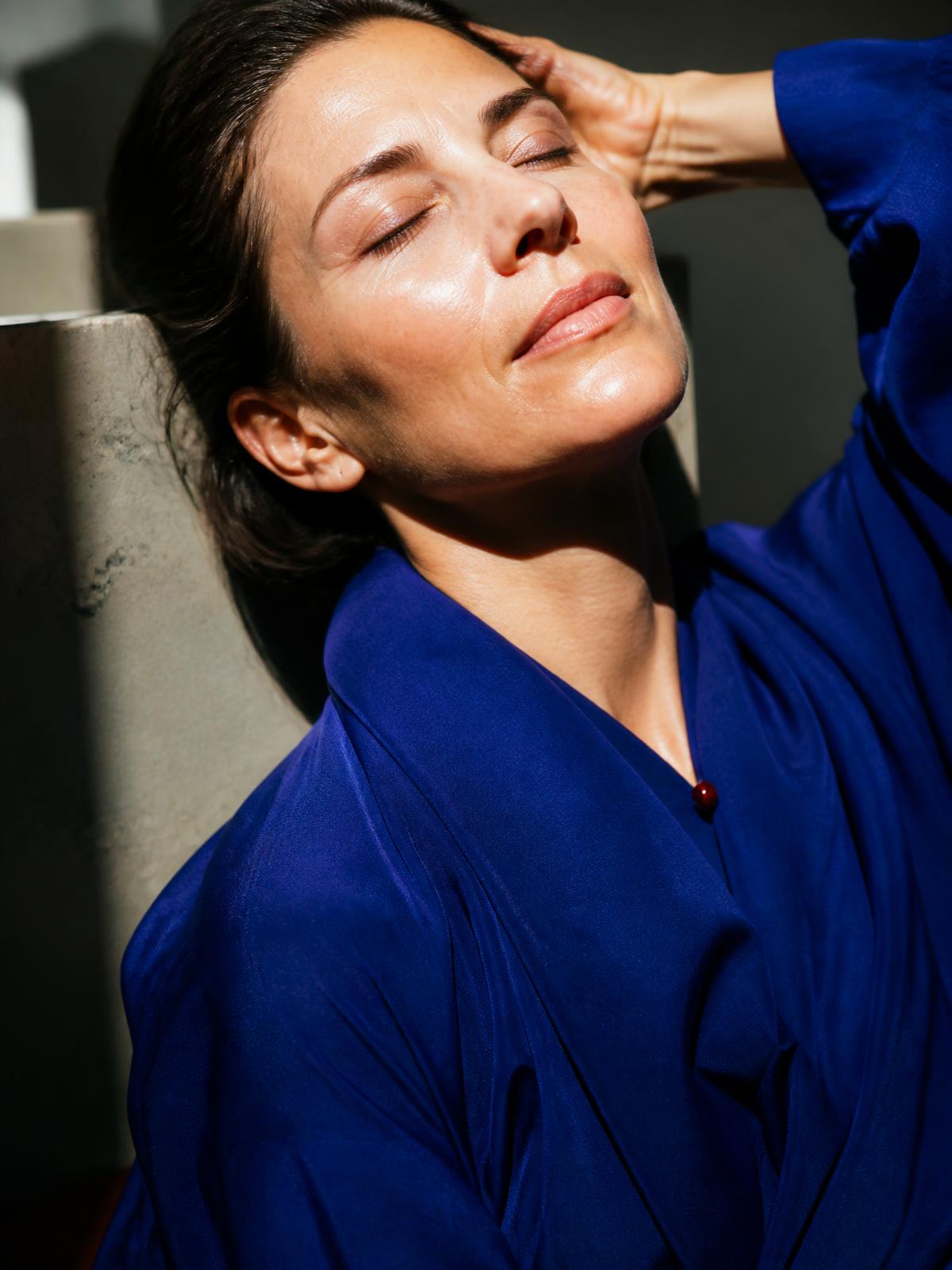 Cover story
The booming sleep industry promises control over our most instinctive state. The evidence tells a more complicated story.
There are sentences that now arrive carrying their own moral authority. “I’m protecting my peace.” “I need to honour my boundaries.” “I don’t have capacity for this conversation.” Often, this is progress. People have better language for saying no, leaving harmful situations and recognising that access to them is not automatic.
There is a particularly modern way to ruin a perfectly decent morning: wake up feeling reasonably rested, check your sleep score and discover that apparently you slept terribly.
You can know exactly why a dinner would not suit you. It is late. It is expensive. The journey home is awkward. You have been looking forward to a night alone. Then you learn that the dinner happened and nobody asked, and the feeling is suddenly less straightforward.
Imagine an evening at home arranged for a photograph. A low light falls across the table. There is a candle, a glass, a book whose cover looks unusually good beside the fabric of the sofa. Nothing appears to need washing, charging, moving or finishing. Even the decision to stay in looks as though it has been made by somebody with excellent taste.
The first page of results is all hospitals and universities. Here is the same evidence without the waiting room tone.
Natural usually means nothing. Here is what it should mean, with honest limits and nothing to buy.
A wellbeing programme cannot fix a workload. Used honestly, the practice is still worth something.
Most advice assumes you control your workload. Occupational health guidance starts with the conditions instead.
The clinical evidence is real but narrower than the marketing, and the starting instructions are simpler.
The imagined audience can be welcome. It does not need a vote in every decision.
Screen-time totals cannot tell connection from passive scrolling. The feeling afterwards might.
A humane reading of emerging memory research, without the viral neuroscience.
The fantasy is no longer being wanted. It is being missed.
Nobody wants zero internet. They want an internet that ends.
Cuffing season is a cultural label, not a hormone switch. Autumn still changes the set.
What happens when the easiest relationship in your life is the one that asks almost nothing from you?
A useful therapeutic idea has become a blunt instrument for ordinary human friction.
Work design, stress and uncertainty are also competing for your cognitive bandwidth.
What companionship looks like when nobody is performing closeness.
A fast, clear reading of the claims currently taking up space in the mind conversation.
Helpful for deficiency; less certain as a universal sleep aid.
Measurement can help, or create a new source of anxiety.
A simple cue for the circadian system.
The week’s most useful research, one considered recommendation, and the things genuinely worth your attention.