Culture / Psychology
Since When Did Looking Happy Become More Important Than Being Happy?
We became very good at experiencing our lives and watching ourselves experience them at the same time. What happens when the audience starts getting a vote?
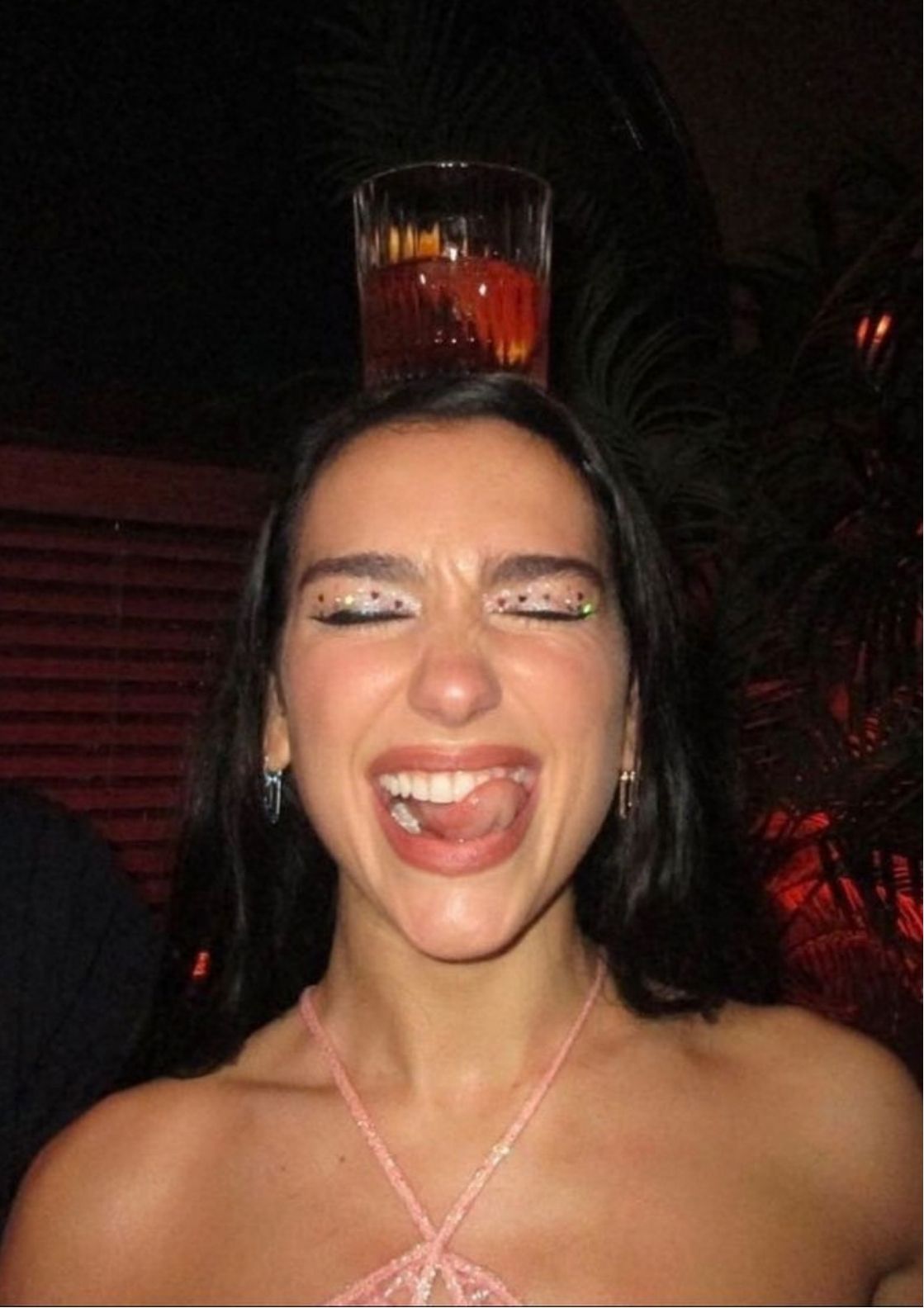
We became very good at experiencing our lives and watching ourselves experience them at the same time. What happens when the audience starts getting a vote?
The story
There is a point at dinner now when the food arrives and nobody is allowed to eat it. The pasta is steaming, everyone is starving, and yet we collectively understand that touching anything would be rude. Not to the chef. To the photograph.
Someone moves the candle. Someone else's hand enters the frame holding a martini. The bread gets pushed slightly to the left because apparently focaccia has a good side. You take one from above, one with flash, one without, one that is deliberately a little blurry because we have collectively decided that blurry photographs mean you were having too much fun to take a good one.
Then, finally, we eat.
This is completely normal.
Which is probably why it's so strange.
We photograph the dinner before eating it. We photograph the holiday while supposedly escaping. We photograph ourselves falling in love while we're still figuring out whether the relationship actually works. Somewhere along the way, having a good life and having proof of a good life became two slightly different things.
And I'm not entirely sure which one we're working harder on anymore.
The obvious explanation would be that social media is fake and everyone is secretly miserable. Unfortunately, that would make life much easier and considerably less true. The dinner really is fun. The holiday really is beautiful. You really do love him.
You just also want the picture.
That's the interesting part.
We have become extraordinarily good at experiencing our lives and watching ourselves experience them at exactly the same time. Am I enjoying this? now occasionally travels with a quieter companion: Does this look like the kind of life I want people to think I have?
And we've become sophisticated about it. Ten years ago, conspicuous happiness was comparatively straightforward: the infinity pool, the designer bag, the bouquet the size of a toddler. Now the highest-status version of happiness barely looks like content at all. It's a slightly blurry table after dinner. Flowers with no explanation. A man's hand rather than his face. The hotel recognizable only to people who already know the hotel. A photograph taken from the back of someone walking somewhere that looks suspiciously like the Amalfi Coast.
Trying too hard is embarrassing now. So even the performance has to look accidental.
We haven't stopped performing happiness. We've just developed better taste about how to do it.
There is, of course, nothing particularly new about wanting other people to think you're doing well. Before Instagram there were Christmas letters, holiday slideshows, society pages, family portraits and the peculiar human tradition of cleaning the house before guests arrive as though we normally live without cables.
Psychology has a rather less glamorous name for some of this: self-presentation. Humans naturally adjust what we reveal depending on who is watching. You behave differently at a job interview than you do alone in the kitchen at midnight. You probably don't tell a first date every terrible thing you've ever done before the starters arrive. We are social animals; managing how other people see us is not a pathology. It is part of functioning around other humans.
Social media didn't invent that instinct.
It gave it extraordinary new working conditions.
The audience is larger. The performance can be edited. You can delete the photograph where you look terrible, wait three hours before answering, choose the version of the story that makes you funniest and publish a weekend in twelve photographs that took forty-eight hours to live.
But perhaps the strangest thing is that the audience doesn't even have to be there anymore.
Researchers studying online behaviour sometimes talk about the imagined audience: the people we picture on the other side of what we post. Not one precise crowd, necessarily. Friends. Colleagues. Exes. People from school. Someone we fancy. Someone we absolutely do not fancy but would nevertheless prefer to think we're doing extremely well.
And once that audience exists in your head, it can enter the experience before anything has been posted.
You don't only choose which photograph represents the holiday afterwards. Part of you can start collecting possible representations while the holiday is still happening.
That's where this becomes psychologically more interesting than vanity.
There is a difference between experiencing yourself from the inside and monitoring yourself from the outside. Psychology has long studied heightened self-awareness and self-monitoring: the tendency to become conscious of ourselves as objects of attention and to compare our behaviour with standards, expectations or the version of ourselves we would like to present.
In normal amounts, this is useful. It's part of how we move through society without behaving like complete lunatics.
Put a camera in everyone's pocket and a potential audience behind it, though, and there are suddenly many more opportunities to stand metaphorically outside your own life and inspect it.
How am I coming across?
Do I look happy?
Does this relationship look good?
Does this look like me?
Which may explain something otherwise quite strange about modern happiness. Sometimes we're not only asking whether an experience feels good. We're simultaneously checking whether it resembles our idea of what a good experience is supposed to look like.
And those are not always the same thing.
A chaotic dinner with six people you adore might make you happier than the beautiful restaurant where everyone is slightly bored. The cheap hotel where you had extraordinary sex may have been a considerably better weekend than the immaculate one where you spent two days arguing. The night with no photographs might have been the one where you forgot your phone existed.
But the prettier experience has an advantage.
It is easier to turn into evidence.
Social media also collapsed the distance between living and publishing. You no longer have to wait until you return from the holiday to show anyone the holiday. You can produce the holiday while you're having it.
And once you can publish your life in real time, you start noticing which parts of it are publishable.
A beautiful table is suddenly two things: dinner and content. A new relationship is a private experience and, eventually, a public announcement. A birthday isn't only about whether you felt loved; somewhere there is also a camera roll that can demonstrate just how loved you were.
Happiness acquired an audience.
And once something has an audience, it can acquire a performance.
Then comes social comparison, perhaps the most obvious piece of the machinery. Humans did not need Instagram to learn envy. We have always looked sideways to work out how we're doing. What social media changed is the extraordinary amount, and peculiar quality, of material available for comparison.
Because there is one fairly absurd asymmetry that doesn't require a PhD to notice:
You experience every minute of your own life and mostly see the parts of everyone else's that they chose to publish.
You know about your fight in the taxi on the way to dinner.
Instagram gets the candlelight.
You know you spent the first morning of the holiday furious because the airline lost your suitcase.
Instagram gets Positano.
You know the relationship contains boredom, insecurity, sex, resentment, tenderness, logistics, stupid arguments and somebody forgetting to buy milk.
Instagram gets the anniversary carousel.
We are comparing the director's cut of our own lives with everybody else's trailer.
Of course the trailers look better.
Research on social media and wellbeing is thankfully more complicated than Instagram is destroying our brains. People use platforms differently, and the effects vary. Authentic self-expression online can be positive; connection can be positive; comparison can pull in another direction. There isn't one universal Instagram effect waiting to happen to everyone who downloads the app.
But there may be a feedback loop that is much more culturally interesting.
We look at other people's lives partly to understand what a desirable life looks like. We absorb the visual language. Then we produce our own version. Other people see ours. They absorb it too.
Nobody necessarily held a meeting and decided that happiness should look like blurry dinner tables, flowers, Pilates, excellent skin, lovers photographed from behind, boutique hotels and groups of attractive friends drinking wine somewhere vaguely Mediterranean.
We taught each other.
We look at other people's lives to understand what a good life looks like, use those images to help construct our own, then put ours back into the system for everybody else to compare themselves with.
Suddenly the audience isn't just watching the performance.
It's helping write it.
What interests me most, though, is what happens before anything gets posted. Because the imaginary audience can enter the room even when the phone is still on the table. We start looking at our lives as potential material. Not constantly, not consciously, but enough that we all recognise the sensation.
You walk into a hotel room and notice the light.
You see the table and know it will photograph beautifully.
Your boyfriend does something sweet and for half a second you think, I wish someone had filmed that.
The moment is still yours.
But another version of you has appeared just outside it, watching.
Perhaps that's why modern status has moved beyond simply looking rich. Looking rich is almost crude now. The more interesting aspiration is looking as though life itself comes easily to you: loved, invited,
healthy, busy but somehow rested, surrounded by interesting people, eating very good pasta in places where reservations are mysteriously difficult to obtain.
Looking happy may be the ultimate luxury signal because money alone can't convincingly manufacture it.
You can buy the hotel room.
You can't buy the fact that everyone at the table seems delighted you came.
And so we document.
This isn't necessarily bad. I love photographs. Most of us do. There are people I would give almost anything to have more photographs of. A camera can make us pay attention. Sharing our lives can create intimacy rather than destroy it. Sometimes posting the dinner is simply fun.
I'm also suspicious of anyone who responds to every modern cultural problem by recommending that women throw their phones into the sea and begin making sourdough.
The question isn't whether we should stop documenting our lives.
It's whether the documentation has started directing them.
Would you still choose the restaurant if it was ugly?
Would you still want the holiday if nobody knew where you'd gone?
Would the flowers mean as much if nobody else ever saw them?
Would you still think the party was incredible if you woke up the next morning and discovered there wasn't a single photograph?
And the uncomfortable one:
Would you still want your life if nobody could see it?
Maybe most of us would.
But I suspect we'd change a few things.
And perhaps those things are worth knowing.
Because the goal isn't to build a life so private that nobody can admire it. Beauty is pleasurable. Presentation is pleasurable. We dress for dinner, arrange flowers, choose hotels, make tables beautiful and tell stories about ourselves because being human has always involved a little theatre.
The problem is only when the audience starts getting a vote.
A good life should probably photograph beautifully sometimes.
It just shouldn't need the photograph to prove that it happened.
“A good life should probably photograph beautifully sometimes. It just shouldn’t need the photograph to prove that it happened.”
Reviewed for accuracy by WT Research Desk