Beauty / Culture
Sunscreen Used to Smell Like Summer
Sunscreen stopped being the slightly annoying thing your mother made you put on at the beach and became skincare. Naturally, the price followed.
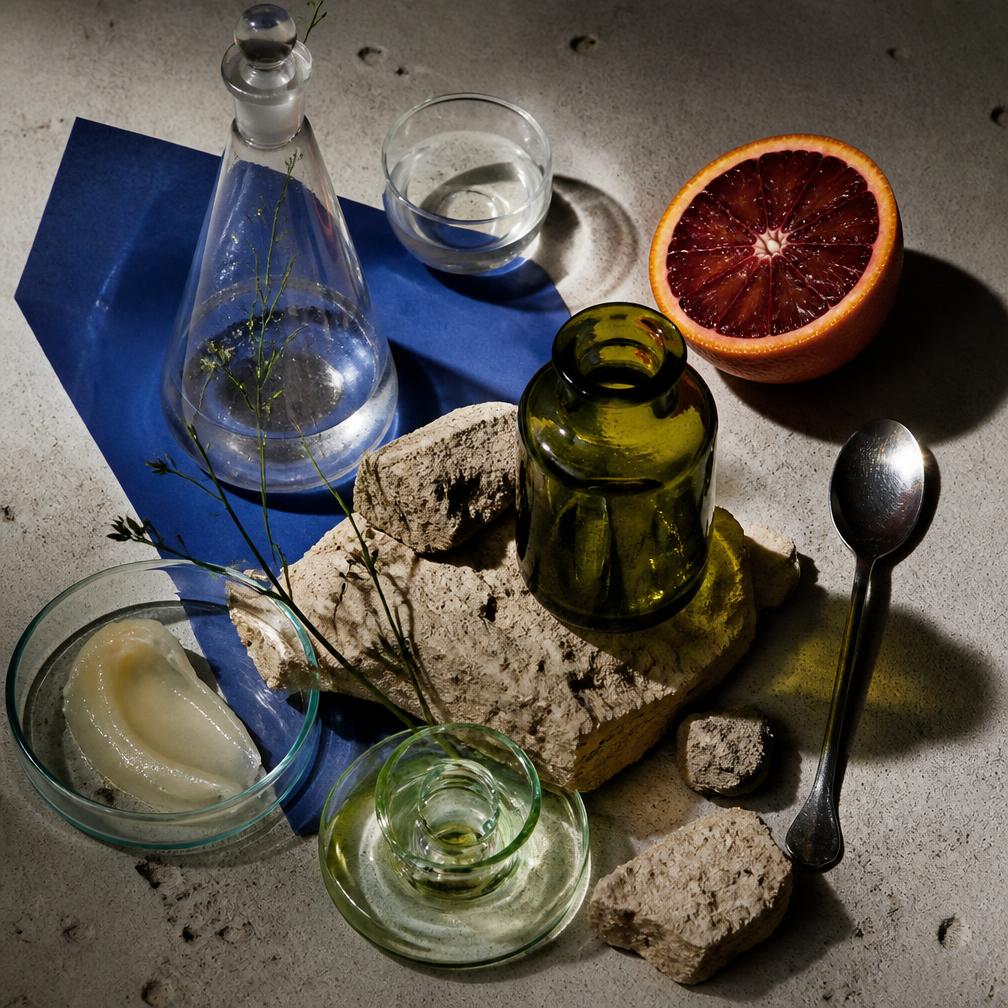
Sunscreen stopped being the slightly annoying thing your mother made you put on at the beach and became skincare. Naturally, the price followed.
From beach bag to bathroom shelf
Sunscreen used to smell like summer.
It lived somewhere between the beach towel and the inflatable crocodile, came in a bottle nobody particularly wanted to photograph and had one fairly straightforward job: stop you burning.
Now it comes in frosted glass. It contains peptides. It sits beautifully under makeup. It promises glow, hydration, invisible finishes and protection from things most of us had not considered worrying about ten years ago.
Somewhere along the way, sunscreen stopped being the slightly annoying thing your mother made you put on at the beach and became skincare. Naturally, the price followed.
“The mistake is assuming that luxury and protection are the same variable. They are not.”
Protection became desirable
This is not entirely a marketing story. Sunscreen formulations really have become more sophisticated. Modern face SPFs can feel lighter, leave less visible residue, work better under makeup and be designed around oily, dry, sensitive or blemish-prone skin. In Europe especially, newer filter systems and high-UVA formulations have helped turn daily sun protection into something much more cosmetically elegant than the thick beach creams many of us remember.
But beauty has done something else to sunscreen too: it has made protection desirable.
The old sunscreen asked you to tolerate it because it was good for you. The new sunscreen wants to sit beside your serum, look good on your bathroom shelf and make you enjoy putting it on.
That matters because sunscreen has an unusually inconvenient relationship with human behaviour. The protection on the label assumes the product is used properly. In real life, people under-apply, miss areas, forget to reapply and abandon formulas they dislike wearing.
So texture is not completely superficial. Neither is finish. Neither is whether the product pills underneath the makeup you are going to wear for the next ten hours. A formula you actually use consistently can be more useful in real life than a theoretically excellent one you avoid.
Price is not an SPF filter
And this is where price becomes interesting.
A €50 sunscreen is not automatically giving you more protection than a €15 sunscreen. Price can buy a more elegant texture, better packaging, a finish you prefer, cosmetic ingredients, brand prestige or simply a much more expensive marketing department. Sometimes it buys several of those things at once.
The mistake is assuming that luxury and protection are the same variable. They are not.
Two sunscreens can both offer strong broad-spectrum protection while feeling completely different on the skin. One may disappear beautifully under makeup. One may control shine. One may be fragrance-free. One may make you look like a glazed doughnut by 11 a.m. Whether those differences justify another €35 is personal. Whether the expensive bottle is automatically safer is not.
This is also why the internet's endless search for ‘the best SPF’ is slightly ridiculous. The best sunscreen is not a universal object. It is the one that offers appropriate protection and fits your skin, your day and your willingness to put enough of it on.
The WT rule
Beauty brands understood something public-health messaging often did not: compliance is easier when the thing is pleasant. That does not mean every luxury SPF deserves its price. It means pleasure can have a practical function.
And perhaps that is the more interesting transformation. Sunscreen used to belong to prevention. Now it belongs to identity too. It can be French-pharmacy sensible, Korean-beauty obsessive, dermatologist-coded, luxury, mineral, glowy, invisible, clean, tinted, serum-like. We are not simply buying protection from ultraviolet radiation. We are buying the version of sun protection that fits the person we think we are.
The WT rule is therefore fairly simple. Pay more for a formula you will genuinely use, a finish you love or a specific formulation your skin needs. Do not pay more because a beautiful bottle has convinced you that price itself is an SPF filter.
Sunscreen used to smell like summer. Now it smells faintly like skincare, status and a very good marketing opportunity. At least it is nicer under makeup.
Reviewed for accuracy by WT Research Desk
Sources and further reading
- Publication copy recovered from the final WT editorial package sent 16 September 2026; protection claims checked against current sunscreen guidance.