Beauty / Explainer
What Actually Are Peptides?
Peptides have somehow become the answer to several completely different questions at once. They are in face serums, supplements, injections, medical treatments and an increasingly strange corner of the internet devoted to longevity. The problem is that the word tells you far less than the marketing around it suggests.
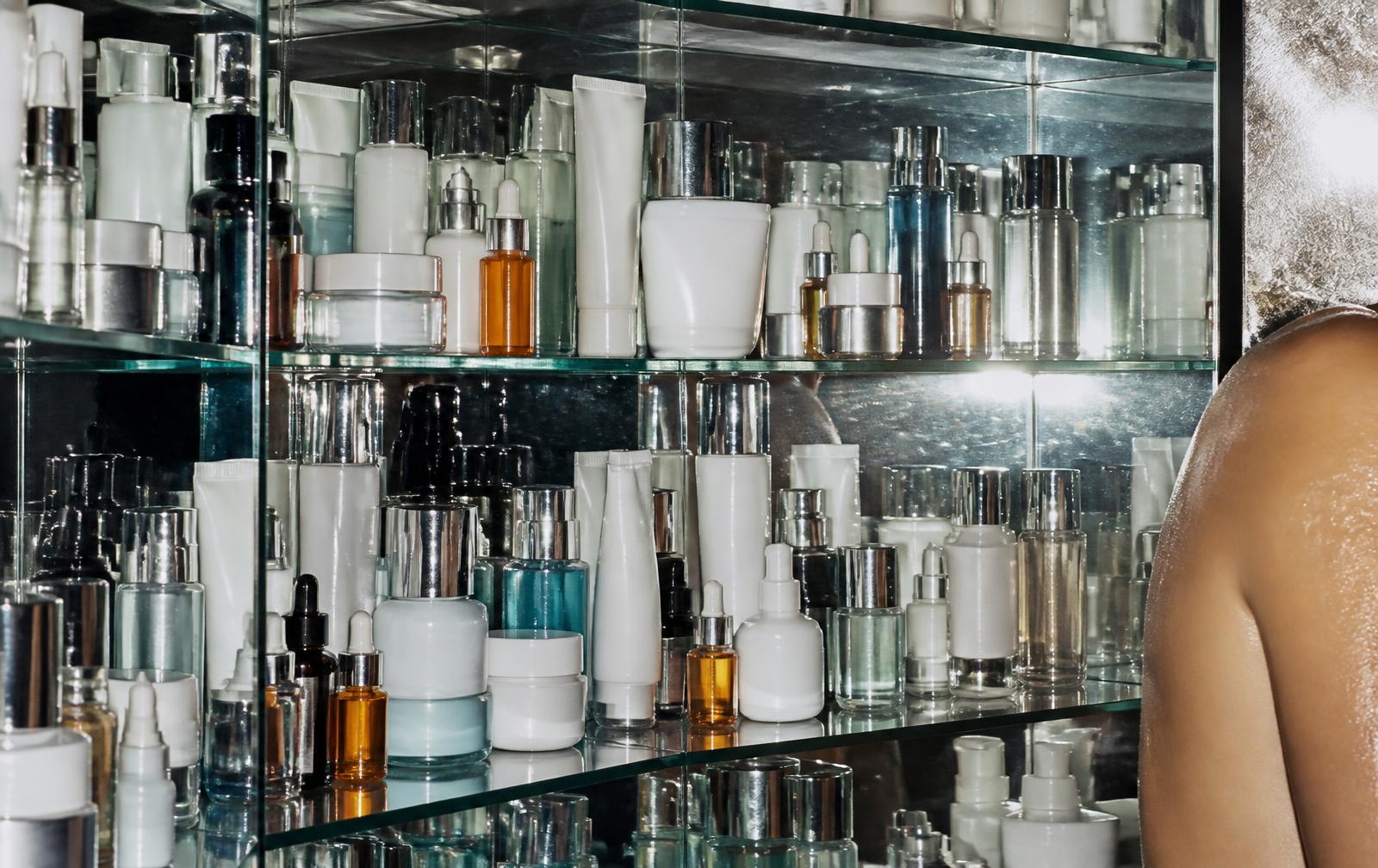
Peptides have somehow become the answer to several completely different questions at once. They are in face serums, supplements, injections, medical treatments and an increasingly strange corner of the internet devoted to longevity. The problem is that the word tells you far less than the marketing around it suggests.
A word that stopped being a question
There are certain wellness words that become so familiar that eventually we stop asking what they mean. “Peptides” is currently one of them. It appears on expensive skincare bottles promising firmer skin, in conversations about collagen, in longevity clinics, on supplement labels and increasingly in social-media discussions about injectable compounds with names that sound more like laboratory inventory than consumer products. The word has acquired the kind of scientific glow that makes a category feel like an outcome. If something contains peptides, the implication is that it must be doing something advanced.
Chemically, the starting point is much less dramatic. Peptides are chains of amino acids, the same basic building blocks that can also join into larger proteins. There are many different peptides, with different sequences, structures and biological functions, which is why asking whether “peptides work” is not a particularly useful question. It is a little like asking whether acids work. Citric acid in an orange, hyaluronic acid in a moisturiser and stomach acid may share a word, but they are not interchangeable experiences.
That distinction matters now because several completely different industries are selling under the same umbrella. A peptide in a face serum is not the same proposition as hydrolysed collagen sold as a supplement, and neither should be casually grouped with a peptide-based prescription medicine. Evidence for one cannot simply be transferred to another because they happen to share a category name. Our original WT guide was built around exactly this problem: before judging a peptide product, you have to establish which conversation you are actually having.
“The useful move is not to become suspicious of every product carrying the word. It is to stop letting the word make the decision for you.”
Skincare: the narrow, less exciting question
Skincare is probably where most people first encounter the term. Cosmetic peptides are added to formulas with a range of intended functions, often around the appearance of ageing skin. Some act as signalling peptides, some are designed to interact with processes involved in the skin’s extracellular matrix, and others are used for different cosmetic purposes altogether. This does not mean every bottle labelled “peptide serum” has the same evidence, nor does it mean that placing a peptide on the skin automatically recreates whatever that molecule may do elsewhere in the body.
This is one of skincare marketing’s favourite tricks: take a real biological concept and allow the consumer to mentally complete the claim. Collagen is important to the structure of skin, therefore something that sounds connected to collagen must rebuild it. Peptides participate in biological signalling, therefore a serum containing peptides must somehow instruct your face to become younger. The actual question is narrower and less exciting: which peptide is in the formula, is it present in a form that can be delivered effectively in that product, what outcome was the finished formula designed to affect, and what evidence supports that specific claim?
There is enough legitimate interest here that peptides should not be dismissed as a meaningless beauty fad. Dermatology guidance does include peptide-containing skincare among options that may be considered for some age-related skin concerns. But that is very different from saying peptides are an essential skincare category or that every peptide serum has been clinically proven to reverse ageing. The formula around the ingredient matters, the stability of the product matters, the condition of the skin matters and the standard against which you are judging it matters.
That last point becomes especially important when the peptide product is competing with things we already understand reasonably well. If someone wants to address photoageing, for example, sun protection and retinoids have a much more established evidence base than most fashionable peptide serums. That does not mean a peptide product cannot be useful or pleasant. It means the word on the front of the bottle should not outrank the rest of the routine.
Supplements are a different system
The same category confusion happens with collagen supplements. Collagen is itself a protein, and many collagen products contain hydrolysed collagen, meaning the protein has been broken down into smaller peptides. Once swallowed, however, the product enters an entirely different biological system from a topical cosmetic. Digestion, absorption, dose, formulation and the specific endpoint being studied all become relevant. A skincare study cannot validate an oral supplement, and a trial of an oral collagen product does not tell us whether a peptide serum works.
This sounds obvious when written out, yet much of wellness marketing relies on allowing those boundaries to blur. A scientific term migrates from medicine into beauty, then from beauty into supplements, and eventually the perceived credibility of one category begins to support another without anyone explicitly making the connection. By the time the product reaches TikTok, “peptides” can sound less like a family of molecules and more like a health philosophy.
Medicines, and the compounds sold as if they were medicines
The injectable and medical side of the category requires even more separation. Several important medicines are peptides or peptide-based drugs. Insulin is a peptide hormone. GLP-1 receptor agonists are part of a pharmaceutical conversation with defined indications, manufacturing standards, dosing and regulatory oversight. None of this establishes the safety or effectiveness of an unrelated injectable compound marketed online as a “research peptide.”
That distinction has become particularly important as longevity and body-composition culture have popularised compounds sold or discussed under names such as BPC-157 and other so-called research peptides. The appeal is understandable. They sit at the intersection of medicine, performance and the fantasy of gaining access to something more advanced than mainstream healthcare. But a mechanistic theory, an animal study or enthusiastic anecdote is not the same thing as established evidence of safety and benefit in humans.
Compounding makes the conversation even more complicated. A compounded product is not simply a more bespoke version of an approved medicine. The regulatory and evidence questions can be very different, and US FDA materials have raised concerns about insufficient safety information for certain peptide substances discussed in compounding. That does not mean every compounded medicine is inherently unsafe, nor does it mean every experimental peptide will prove useless. It means the burden of proof should increase rather than decrease as the product moves further away from well-characterised, approved use.
This is probably the most useful peptide rule: the more consequential the claim, the more specific your questions should become. A €25 cosmetic serum and an injectable compound should not be evaluated with the same level of scrutiny because the potential consequences are not remotely comparable. “It is a peptide” is never a sufficient explanation of why you should put something on your face, swallow it or inject it.
What we would ask on the shelf
On the skincare shelf, we would start with a much more boring question: what are you actually trying to change? If the answer is dryness, you may need a better moisturiser rather than another active. If the answer is fine lines, look at the entire routine and the evidence behind the ingredients already in it. If you still want a peptide serum, look at the finished formula, the claims the brand actually makes, whether there is data on that formula rather than only on an isolated ingredient, and whether adding it creates a meaningful step or simply another bottle.
We previously used The Ordinary’s Multi-Peptide + HA Serum as an example because the brand provides a full ingredient list, intended cosmetic use and application information that readers can inspect directly. That makes it a useful example of how to assess a product rather than a declaration that it is the “best” peptide serum. Manufacturer information tells us what the company says the product contains and is designed to do; it should not be presented as independent proof that the serum outperforms every alternative.
This approach is less satisfying than a list of the five peptides everyone should start using immediately. It is also considerably more useful. A category does not become essential because it is suddenly everywhere, and understanding the vocabulary of a product is not the same as establishing that you need it.
Nouns before questions
That may be the larger lesson of the peptide boom. Modern wellness increasingly gives us scientific nouns before it gives us useful questions. We learn the words collagen, cortisol, dopamine, peptides and mitochondria, and then products arrive conveniently positioned as ways to improve them. The language can create the impression that the body is a dashboard full of individual metrics waiting for intervention.
Peptides are real. Some are medically important. Some are interesting cosmetic ingredients. Some may eventually prove valuable in contexts we are still studying. Others are being marketed considerably faster than the evidence underneath them.
The useful move is not to become suspicious of every product carrying the word. It is to stop letting the word make the decision for you.
Before buying, taking or considering a peptide, ask what molecule we are actually talking about, what form it comes in, what outcome it is supposed to produce and what evidence exists for that specific use. Once those questions are answered, the category becomes much less mysterious.
And usually much less magical.
The WT check before buying a peptide product
For a topical skincare product, decide what you want it to do before looking at the marketing. Check the full formula, the specific claim, the evidence behind the finished product where available, the price relative to better-established parts of your routine and whether the serum genuinely adds something you are missing.
For supplements, look at the exact ingredient and dose rather than assuming evidence about topical peptides applies orally. For medicines or injectable compounds, the question moves out of ordinary shopping entirely and into medical evidence, approval status, manufacturing quality, indication and professional oversight.
The word on the label is only the beginning of the conversation.
Reviewed for accuracy by WT Research Desk
Sources and further reading
- This article builds on the existing WT peptide guide, which deliberately separates topical skincare, oral products and medicines rather than treating them as one category. It uses American Academy of Dermatology guidance for skincare context, official product information only as manufacturer information, and FDA materials when discussing compounded peptide substances.