Travel / City Edit
Put This on Your Map: Paris
Paris does not need another list of “must-sees.” It needs a good route. A few places worth crossing the city for, a bookstore where you accidentally lose an hour, a gallery that still feels like discovery, and somewhere to sit down before the day turns into logistics.
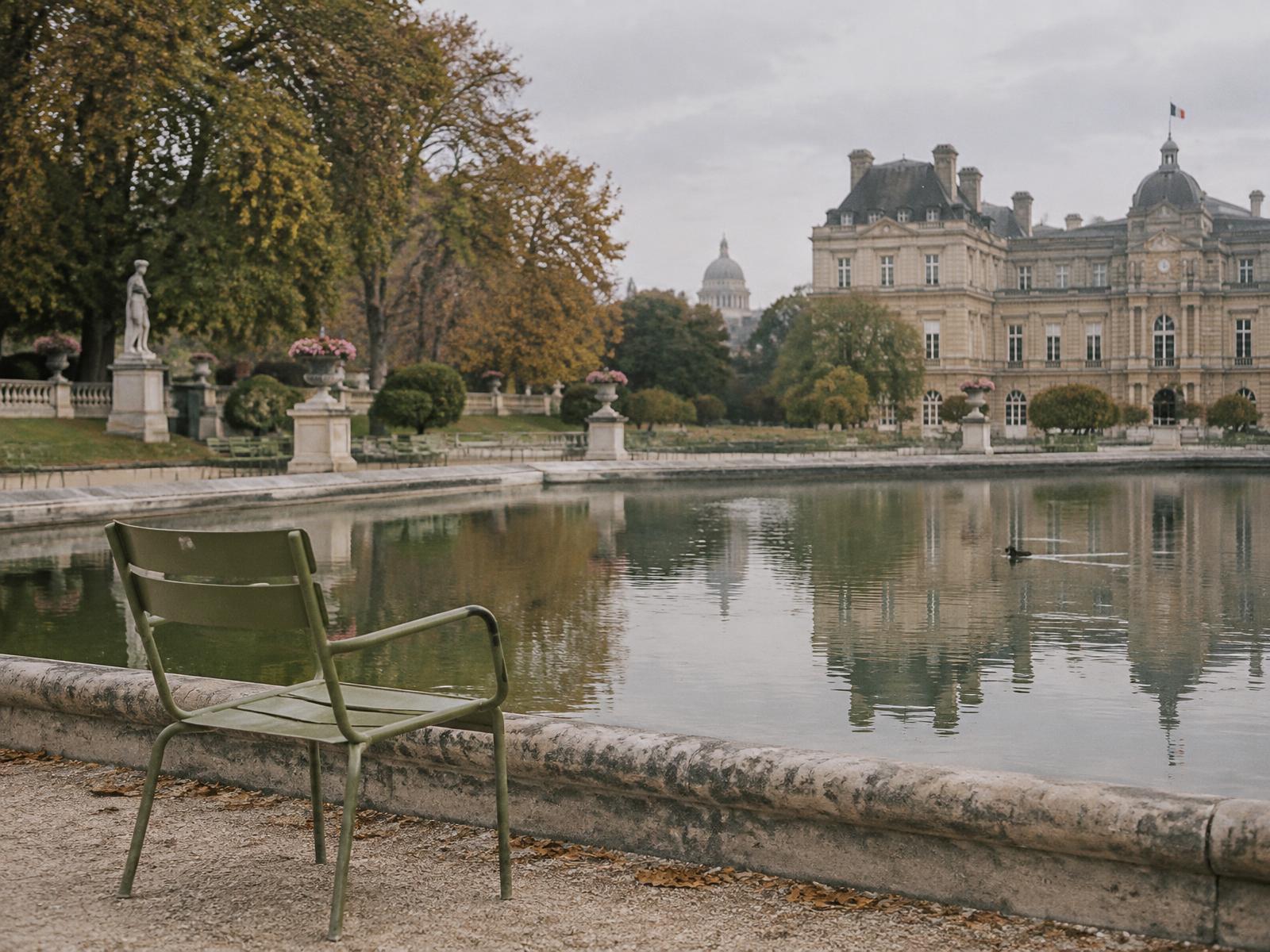
Paris does not need another list of “must-sees.” It needs a good route. A few places worth crossing the city for, a bookstore where you accidentally lose an hour, a gallery that still feels like discovery, and somewhere to sit down before the day turns into logistics.
A smaller map
The problem with most city guides is that they make travel feel like a scavenger hunt.
You arrive with twelve saved posts, seventeen restaurant screenshots and the vague conviction that you are failing Paris if you have not eaten the croissant someone on TikTok waited forty minutes for. By the second afternoon, the city has become a list of evidence you are supposed to collect.
We prefer a smaller map.
Not the definitive Paris. Not even necessarily the “best” Paris. Just a version of the city that makes sense for WT: art, books, design, food, places with a point of view, and enough room between them to actually notice where you are.
This is what we would save right now.
“Taste is not knowing the place nobody else knows. It is knowing why you chose the place.”
Start in the Marais, but do not turn it into a shopping sprint
The Marais is almost too easy to recommend because everyone is already there. That does not make it less useful. It makes curation more important.
We would start with Yvon Lambert, the bookshop and gallery on Rue des Filles du Calvaire. It is one of those places where contemporary art, photography, publishing and objects blur together enough that you rarely leave with the thing you expected to buy. Current listings show it open Tuesday through Sunday, with a later Sunday start. The reason to go is not because Paris lacks bookstores. It is because this one still feels edited.
From there, wander rather than immediately opening Maps again. The Marais works best when you allow yourself to miss the street you meant to take.
If you want another book stop, OFR Bookshop on Rue Dupetit-Thouars remains a useful address for independent magazines, art books, photography and the kinds of publications that usually end up back on the WT desk. It is visually messier than a luxury concept store, which is part of the point.
The best version of this neighbourhood is not three hours of shopping. It is one or two things you genuinely want to see, followed by a long lunch.
For design, go where the objects have an argument
A good design stop should make you reconsider something you already thought you understood.
Galerie Patrick Seguin in the 11th is worth crossing town for if you care about twentieth-century architecture and furniture. The gallery is known for work connected to Jean Prouvé, Charlotte Perriand and other major figures of French modernism, and the space itself usually feels closer to an architectural study than a decorative showroom.
This is one of the places we like because it resists the current design-internet habit of flattening everything into “inspo.”
The object has a history. The proportions came from somewhere. The material choice has a reason. That is always more interesting than simply deciding a chair looks expensive.
Buy a book you were not looking for
Paris is still unusually good at making reading feel like part of the city rather than something you do after leaving it.
Librairie Galignani on Rue de Rivoli is the elegant version. It has the history, the polished wooden shelves, a strong English-language selection and the feeling that buying a book here somehow counts as an event.
If you want the opposite mood, Artazart by Canal Saint-Martin is more contemporary and design-heavy, particularly good for photography, architecture, fashion and visual culture.
You do not need both in one day. That is perhaps our main Paris rule. Do not make the day worse in order to complete the guide.
The city is getting new rooms again
One reason Paris remains interesting is that the cultural map keeps changing even when the city itself can feel completely fixed.
Paris je t’aime’s September 2026 openings update lists several new or returning addresses.
One we are watching is the reopening of L’Alcazar in Saint-Germain-des-Prés. The venue reopened in September 2026 after a reinvention that brings back its dinner-and-performance identity, with a theatrical interior, live performers and a programme designed around the venue’s nightlife history. Paris’s tourism office describes the relaunch as a return to the avant-garde, entertainment-led DNA of the original address.
This is not a quiet wellness recommendation. That is exactly why it belongs here.
Living well cannot only mean herbal tea, early nights and places that photograph in beige. Sometimes it means dinner somewhere slightly excessive.
Also worth noting: the newly renovated Hôtel d’Aubusson and Café Laurent are reopening at the end of September in the 6th arrondissement, which makes this a useful moment to revisit Saint-Germain rather than assuming you already know it.
Stop treating cafés as productivity infrastructure
There is a specific travel mistake where every café becomes a place to answer messages.
We would resist it.
A city is much more legible when you sit somewhere without doing anything productive. Order something, look at the room, notice who is there and allow twenty minutes to pass without extracting value from them.
If you do want books and coffee in the same place, BKNK Book Nook in the 9th is a more literal version of the idea. We would treat it as a pause rather than a destination around which to rebuild the day.
That distinction matters. Not every attractive place deserves a forty-minute detour.
Keep one classic
There is always a temptation with city guides to prove taste by avoiding anything obvious.
We do not think that is necessary.
Shakespeare and Company is crowded, famous and photographed constantly. It is also still a genuinely lovely bookshop in one of the most beautiful parts of Paris.
Go early. Buy something. Walk along the Seine afterward.
You are allowed to enjoy a classic without pretending you discovered it.
That may be the broader WT approach to travel. Taste is not knowing the place nobody else knows. It is knowing why you chose the place.
A small wellness note, because this is still WT
Wellness travel has become its own category of pressure. Suddenly every city needs a reformer class, lymphatic drainage appointment, sauna, cold plunge and supplement store before lunch.
We would rather choose one thing that actually fits the day.
If you want a dedicated wellness stop, Breathe in Paris in the 7th is one current option. But we would not build the map around wellness appointments unless you genuinely want them.
Walking across Paris is already a fairly decent way to spend a morning.
There is no prize for returning from a city more regulated than when you arrived.
The WT Paris route
If we had one day and wanted it to feel like Paris rather than a content plan, we would begin in the Marais with Yvon Lambert, walk without too much urgency, stop for lunch, cross toward Saint-Germain later in the afternoon, buy a book at Galignani and stay somewhere longer than originally planned.
The next day can belong to design: Galerie Patrick Seguin, Canal Saint-Martin, Artazart, then dinner somewhere with more personality than restraint.
And at least one half-day should remain completely unassigned.
That is the part most city guides are afraid to recommend because it cannot be saved in advance. It is also usually where the trip begins to feel like yours.
Paris does not need you to see everything. It probably benefits from you seeing less and looking properly.
Reviewed for accuracy by WT Research Desk