Paris / Art & attention
Twenty-Seven Seconds in Front of Monet
What slow looking can do, what neuroscience cannot yet claim, and how to spend an hour at the Orangerie without turning attention into another performance.
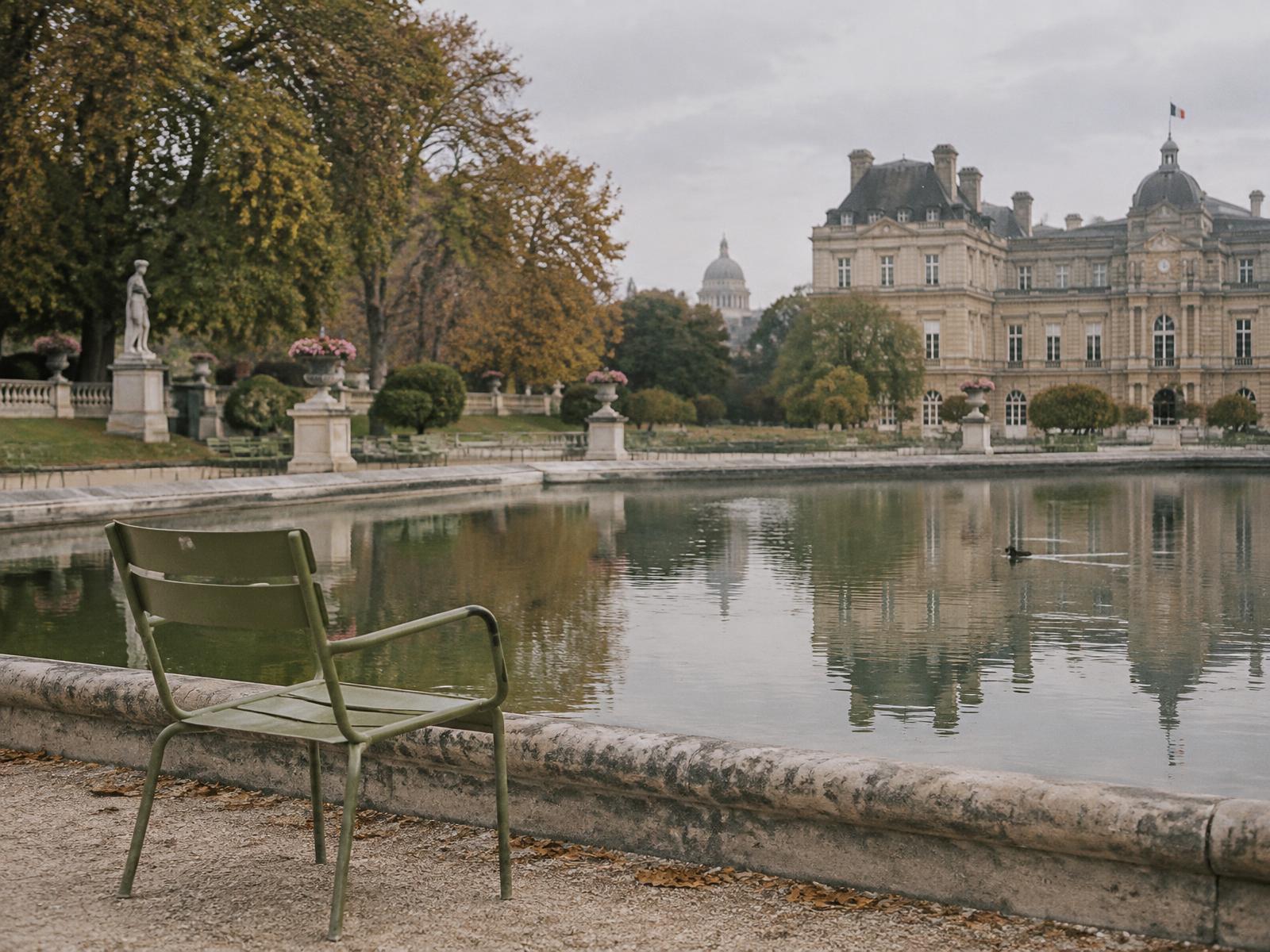
What slow looking can do, what neuroscience cannot yet claim, and how to spend an hour at the Orangerie without turning attention into another performance.
The twenty-seven-second problem
A museum visit can become a peculiar form of administrative work. Enter room. Identify famous object. Read label. Take photograph. Move on. The collection is completed, yet very little has been seen. We bring the logic of the feed into a building designed for sustained attention, then wonder why culture feels like another queue.
Researchers observing visitors at the Metropolitan Museum of Art found a mean viewing time of 27.2 seconds per artwork, with a median of 17 seconds. A later study at the Art Institute of Chicago produced a similar average. The exact figure is less important than the behaviour it describes: most encounters with art are brief, and many end just as perception begins to move beyond recognition.
The Musée de l’Orangerie offers a useful place to resist. Monet’s Water Lilies occupy two oval rooms, their panels curving around the viewer under diffuse daylight. There is no single correct starting point and no small frame to contain the scene. The room asks the eye to move, but it does not tell it where to finish.
This is often described as immersive, a word weakened by projection rooms and ticketed spectacles. Here, immersion is architectural. The paintings remain paintings. The room simply gives them enough space to become an environment.
“The point is not to look correctly. It is to remain long enough for the first impression to become insufficient.”
A building made for light
The Orangerie was built in 1852 as a winter shelter for the orange trees of the Tuileries. Its architecture answered a practical horticultural problem: a glazed southern facade admitted light and warmth, while the more closed northern side offered protection. Long before the paintings arrived, the building was already an instrument for controlling attention through light.
Monet worked on the Water Lilies cycle over decades, drawing from the garden he made at Giverny. The day after the Armistice in November 1918, he offered a group of large panels to the French state as a symbol of peace. The oval rooms were developed around his spatial intentions. They opened in 1927, months after his death.
The result does not behave like a conventional sequence of pictures. Horizon lines dissolve. Reflections, clouds, willow branches and water occupy the same surface. Distance becomes difficult to fix. Walk closer and the pond breaks into marks. Step back and weather returns. The paintings make confidence unstable, which is one reason a quick glance is particularly inadequate.
Downstairs, the Walter-Guillaume collection moves through Cézanne, Renoir, Matisse, Picasso, Soutine, Modigliani and others. It deserves time, but the mistake is assuming that a ticket creates an obligation to see everything. The Orangerie is small enough to reward subtraction. One oval room, properly attended to, can be a complete visit.
What slow looking changes
Slow looking is not a single clinical protocol. In museums it usually means spending longer with fewer objects, postponing interpretation and allowing visual details to emerge before reaching for the label. The practice has been embraced by educators because it encourages observation and conversation. More recently, researchers have begun testing what extended viewing changes.
A preregistered 2025 study from researchers associated with the Penn Center for Neuroaesthetics found that slow looking enhanced aspects of aesthetic experience. An online study asking participants to spend three minutes with each artwork also reported a more pleasant and relaxed mood after the session. These findings support a modest claim: duration and the way attention is directed can alter an encounter with art.
They do not prove that fifteen minutes in front of Monet repairs the brain, resets the nervous system or treats anxiety. Eye-tracking research adds an important complication. Longer fixation is not automatically the same thing as greater aesthetic appreciation. People look differently, bring different histories and notice different things. Attention is not valuable merely because a stopwatch says it lasted.
The strongest reason to look slowly may therefore be the least medical. More time gives perception a chance to change. What first appears tranquil can become restless. A patch of blue that read as sky becomes water, then paint. The work stops functioning as an instantly recognisable Monet and begins to resist the name attached to it.
Where neuro-aesthetics runs ahead
Art and the brain make an irresistible pairing for headlines. A gallery is said to activate reward networks, lower cortisol, stimulate the default mode network or produce neurological restoration. Some research behind those ideas is serious. The conclusions attached to it are often much larger than the experiments.
Attention Restoration Theory, for example, proposes that certain environments support recovery from directed mental effort through a form of gentle fascination. Research on natural settings provides some support, but reviews have found inconsistent results across attention measures, and the theory’s concepts remain debated. Applying it directly to Monet’s painted pond is an attractive inference, not an established finding.
Neuro-aesthetics faces a broader problem. Showing that a brain region participates while a person looks at art does not fully explain beauty, meaning or why one painting stays with someone for years. Imaging can describe part of an event without exhausting the event. Critics are right to be wary when cultural experience is reduced to a bright patch on a scan.
The editorial rule is simple: do not add a brain claim when an ordinary description is more accurate. The oval rooms may feel calm. Their scale may interrupt hurried looking. A visitor may leave with a quieter mind. Those are real experiences, but they do not need to be inflated into neurological repair.
A protocol that is not a protocol
Go at opening, not because 9am has special biological power, but because fewer people make sustained attention easier. The museum is closed on Tuesdays and ordinarily opens from 9am to 6pm, with later Friday hours during some exhibitions. Check the official site before travelling, since access and prices change.
In the first oval room, choose one section rather than a whole panorama. Stand far enough back to notice the composition. For the next minute, avoid naming anything. Follow colour, edges, repeated marks and changes in density. Then move closer. Notice where the image stops behaving like a pond. Step back again and see what reassembles.
After three to five minutes, change position rather than changing painting. Sit if a place is available. Let other visitors cross the view. Read the room’s information only after looking, then decide whether the text altered what you see. There is no prize for reaching fifteen minutes, and endurance is not attention.
When you leave, walk through the Tuileries without immediately opening the camera roll. Paris has a long tradition of treating walking and looking as serious activities. The flâneur can be romanticised, but the underlying refusal remains useful: movement does not always need a destination, and looking does not always need a capture.
This is the promise of slow looking at its most defensible. Not therapy. Not optimisation. Not a claim that Monet can reverse the attention economy in one morning. Just a deliberate change of pace, long enough for an image to become less obvious and the day around it to feel less automatic.
Reviewed for accuracy by WT Research Desk
Sources and further reading
- Musée de l’Orangerie: history of the building
- Musée de l’Orangerie: Monet’s Water Lilies
- Smith and Smith: Spending Time on Art, Empirical Studies of the Arts (2001)
- Estrada Gonzalez et al.: Slow looking enhances aesthetic experience (2025)
- Igdalova and Chamberlain: Slow looking and mood
- Musée de l’Orangerie: visitor information